
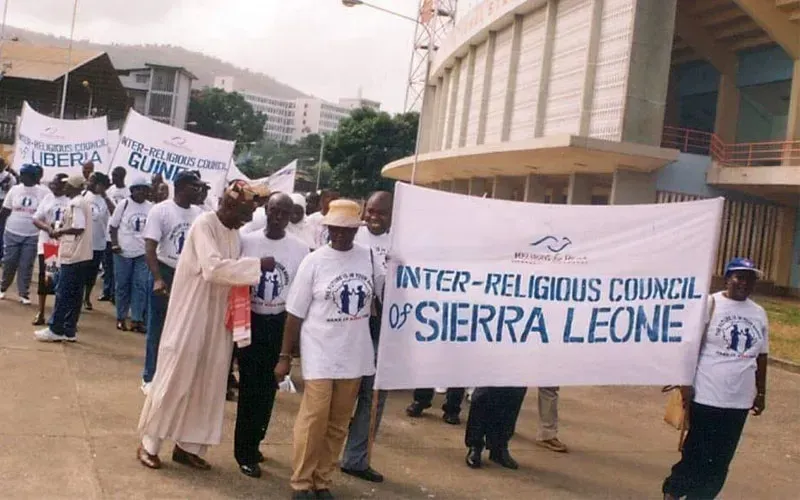
Religious leaders’ nuanced views on birth spacing and contraceptives in Sierra Leone
A qualitative study with the Christian Health Association of Sierra Leone finds religious leaders hold more differentiated views on contraception than public debate assumes.
Struggles to implement Comprehensive Sexuality Education (CSE), alongside sub-optimal family planning programmes, have contributed to Sierra Leone’s high rate of adolescent pregnancy. Within that picture, the role religious leaders play in shaping community attitudes, and in turn public health outcomes, is hard to overstate. A qualitative study led by the Institute for Development (IfD), in collaboration with the Christian Health Association of Sierra Leone and the Department of Biological Sciences at Njala University, set out to understand exactly where religious leaders stand on birth spacing and contraceptives.
Diverse perspectives among religious leaders
The study ran focus group discussions with 32 Muslim and 84 Christian religious leaders, spanning nine denominations across 11 districts. What emerged was a genuine spectrum of opinion, not a single unified position:
- Natural birth spacing methods, such as abstinence during fertile periods, found general acceptance across both Christian and Muslim leaders.
- Catholic leaders were generally opposed to modern contraceptive methods, citing religious doctrine against interfering with procreation.
- Pentecostal leaders, and some Muslim leaders, found modern contraceptives more permissible under certain circumstances, particularly where they were understood to support family well-being.
Opportunities for collaboration
The findings point to real openings. Support for natural birth spacing methods already exists across both Christian and Muslim leaders and could be built on directly. Just as significant is the more accepting group within each faith: the Christian and Muslim leaders open to modern methods, who represent a genuine partner for improving health outcomes, rather than an obstacle to work around.
Building on the findings
IfD is now taking this further with ODI, through the Align project, which looks specifically at Muslim religious leaders’ views on CSE in Sierra Leone. Align is working to identify concrete entry points for policymakers and practitioners: places where CSE and the views of Muslim religious leaders can genuinely align, rather than talk past each other.
The goal is straightforward to state and harder to do: introduce CSE in a way that is respectful of, and accepted by, Muslim religious leaders and the wider community they serve.
For the full findings, see Religious leaders’ views on birth spacing and contraceptives in Sierra Leone.