
National Evidence Summit and Award.
An annual national convening, and a prize for the ministries putting evidence to work.
In the same room
Evidence changes nothing on its own. We bring the people who produce it face to face with the people who act on it.
Who produces evidence
- Researchers and universities
- NGOs and evaluators
- Communities with lived experience
How we bring them together
The SummitA yearly national conveningThe AwardFor ministries that use evidenceHow we conveneFive formats, from dialogue to coalitionWho acts on evidence
- Ministries, departments and agencies
- District councils
- Funders and development partners
The Summit, year by year
2025Precursor
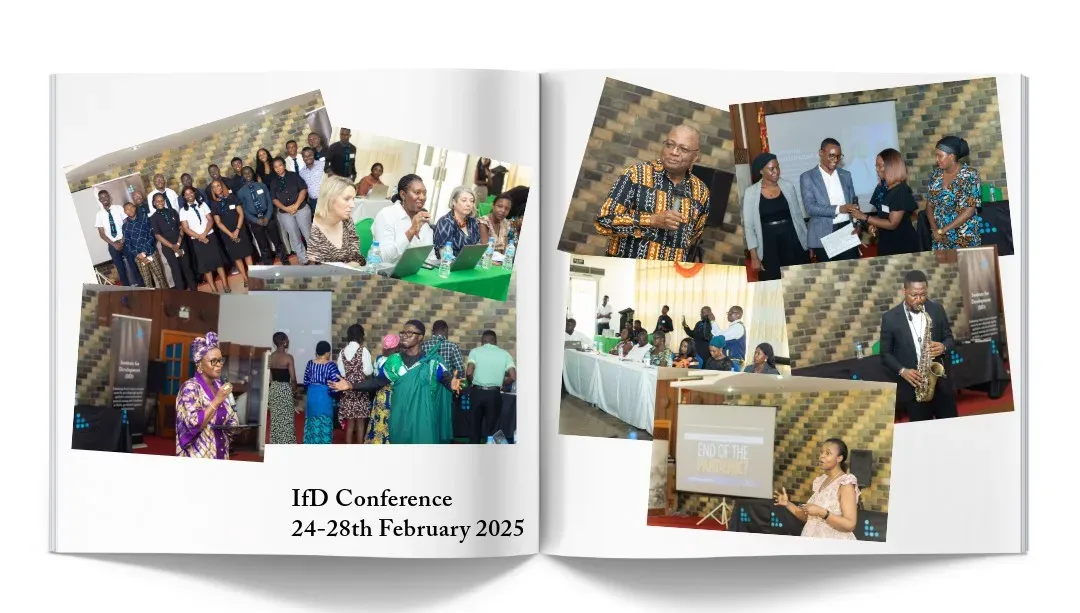
Institute for Development Conference 2025
“What does it take to build recovery and preparedness in Sierra Leone?”
- Sierra Leone’s research and development community convened on crisis, recovery and preparedness
- Poetry, theatre and testimony alongside the research; Ebola survivors and the Children’s Forum Network took the floor
- The first National Evidence Award, to the Ministry of Health
- The starting point for an annual national Summit
2026
National Evidence Summit 2026
“Local Drivers of Change”
- The first National Evidence Summit, three days in Freetown and online
- Government, NGOs, civil society, traditional and youth leaders in one room
- Community knowledge and lived experience alongside research findings
- National Evidence Award 2026 presented to the Ministry of Health
2027
National Evidence Summit 2027
“Shuku Blai: What should Sierra Leone carry forward?”
- 24–25 February 2027
- Freetown City Council, 17 Wallace Johnson Street, Freetown
- Hybrid: in person and online
- National Evidence Award 2027 presented at the Summit
National Evidence Award
The Award recognises government ministries, departments and agencies that show strong, practical use of evidence to inform decisions, shape policy and improve results.
The 2026 award highlighted how routine administrative data and research or evaluation findings can be applied to improve policies, resource allocation and service delivery.
- 2026
- 1st placeMinistry of HealthUsing routine health data and evaluation findings in resource allocation
- 2nd placeNational Water Resources Management Agency
- 3rd placeSierra Leone Meteorological Agency
- 2025
- Ministry of HealthEvidence-informed response planning
Five ways we convene
National and regional conferences
Full-scale convenings bringing together government, universities, NGOs, research networks, creatives and people with lived experience. The National Evidence Summit is the flagship.
Policy dialogues
Focused sessions on a single live policy question, designed so the people with decision rights are in the room and the evidence is put in front of them in a usable form.
Stakeholder consultations
Structured consultation as part of a research or reform process, identifying and prioritising evidence needs with policymakers, practitioners and communities.
Reform coalition facilitation
Standing cross-sector groups with a problem to solve and a mandate to solve it. Our work on the Kush crisis in Freetown runs this way, with government representatives, community leaders and youth organisations inside the enquiry.
Expert working groups
Smaller technical groups convened around a methodological or sectoral question, usually feeding a larger process.
Interested in the Summit or the Award?
Register your interest for the next Summit, nominate for the Award, or ask us to convene around your question.