
Research that decisions are actually made on.
Improving Sierra Leone's research sector by providing high-quality qualitative and mixed-methods research.
From experience to institution
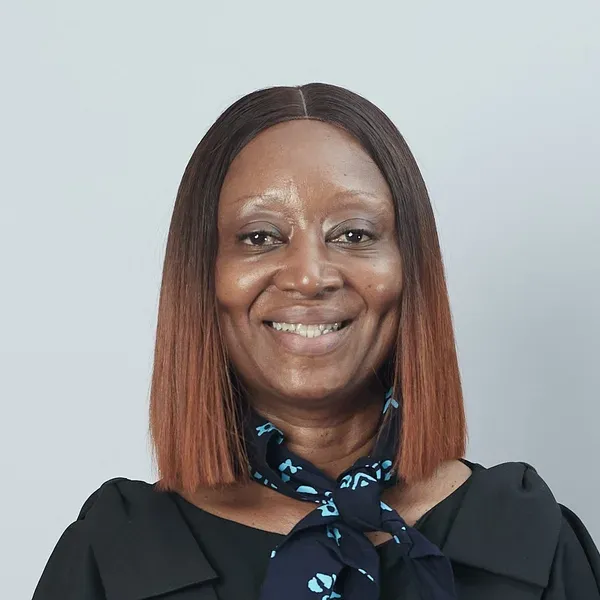
The idea for the Institute for Development (IfD) took shape before 2013, while Regina Mamidy Yillah was working at a Health International NGO.
When programmes there were evaluated, the evaluators came from outside. The work was done well, but the team had to supply the context, and when the evaluation ended the evaluators left.
Then she saw the other side, where staff are used as peer evaluators for other programmes, and she spent some days in Ethiopia evaluating one. She came away having learned a great deal about Ethiopia.
That raised a question. What if Sierra Leone had an institute where Sierra Leoneans could spend time looking in depth at the country's own problems? Even if those people later moved on to other work, they would carry that understanding with them.
IfD grew out of that question, and a desire to build something that could contribute to a stronger research and development sector in Sierra Leone, a vision she sees echoed in the research on evidence use today.
People are more likely to use evidence they were part of generating.
Four phases, 2013 to 2031
Building a research institution
The early years established a credible Sierra Leonean research organisation capable of delivering high-quality field research and evaluation: programme evaluations, baseline studies, formative research and data collection for international research organisations.
IfD built core research capability inside the country, demonstrating that high-quality research could be led by a national institution rather than by external consultants. It laid down the research methods, the field systems and the first partnerships.
July 2013
IfD is registered
Registered in Sierra Leone. IfD started small, but the work began quickly.
August 2014
The first project and the first staff member
A study for UNICEF, and Muallem Kamara joins, helping turn a founder-led vision into a growing team.
April 2018
Five years on FCDO Saving Lives
With Montrose: joint field visits, data collection and analysis, running to June 2023.
From research delivery to research partnerships
IfD moved from short-term assignments to deeper partnerships and multi-year research programmes: action research on teenage pregnancy, disabled women’s access to sexual and reproductive healthcare, and WASH data collection.
The institute established itself as a trusted partner inside international consortia rather than a subcontractor to them, and began contributing to larger global research programmes. Gender equality, adolescent health, health systems and participatory research came into focus.
April 2019
The partnership with ODI begins
Action research on teenage pregnancy with the Secure Livelihoods Research Consortium, the start of work with ODI that continues today.
July 2021
Sierra Leone's Costed Implementation Plan
With Avenir Health, under USAID Momentum.
September 2021
African Cities Research Consortium
With the University of Manchester, ODI and the Liverpool School of Tropical Medicine, on youth, health and wellbeing in Freetown.
July 2022
THRIVE
A multi-country programme on early childhood development at scale, funded by FCDO and managed by Oxford Policy Management.
Addressing complex development challenges
Large multi-year research and implementation programmes addressing systemic challenges: health systems in fragile settings, adolescent empowerment across three countries, what happens after a crisis is declared over, and the Kush crisis in Freetown.
IfD Tech was established in 2024 to build the digital infrastructure the research kept needing and could not buy, the arm that now develops Sabi Core. Alongside it, the institute expanded into public engagement and knowledge exchange, convening government ministries, universities, NGOs, research networks, creatives and people with lived experience of crisis.
2023
An intermediary as well as a producer
IfD starts making sure its evidence is found, understood and used, not only produced.
August 2023
Leh Wi Lan
Research on Sierra Leone's secondary school improvement programme, with a nationally representative survey across all 16 districts.
September 2023
Foundations
A six-year gender-transformative programme with ODI, supporting adolescent girls to exercise their sexual and reproductive health rights.
September 2023
After the End
With the University of Oxford and funded by Wellcome: what happens to people after a crisis is declared over, running to 2031.
2024
IfD Tech is established
To build the digital infrastructure the research kept needing and could not buy. It now develops Sabi Core.
2025
ReBUILD for Resilience
Sierra Leone research partner in the consortium led by the Liverpool School of Tropical Medicine, on health systems in fragile settings.
February 2025
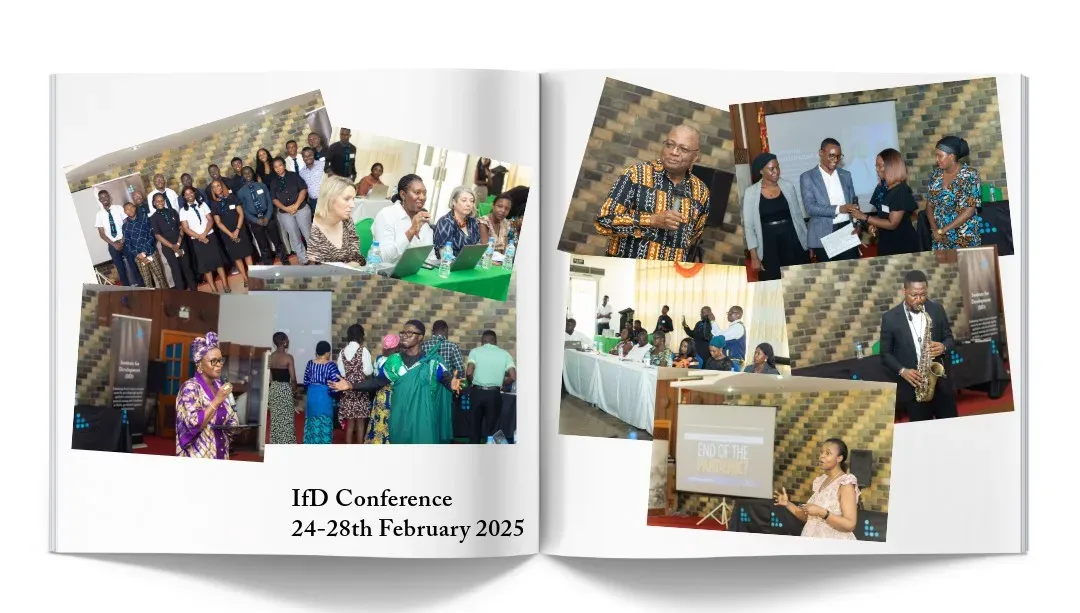
IfD national conference
Sierra Leone's development and research community, on how the country prepares for and recovers from crises.
Beyond a research institute
IfD is now working to strengthen how evidence is used across Sierra Leone’s whole development system. The goal is that by 2031, government, donors, NGOs, civil society and the media are measurably better able to access and use evidence in decision-making.
That means national evidence infrastructure (Sabi Salone) alongside the National Evidence Summit, the National Evidence Award, and a creative arts festival connecting research to culture and youth voices.
2025
Creative arts festival
Connecting research to culture and youth voices.
2025
The first National Evidence Award
Recognising a government ministry for strong, practical use of evidence; the Ministry of Health, for evidence-informed response planning.
June 2025
Sabi Salone launches
National evidence infrastructure: the country's laws, policies and evaluations in one place you can question.
2026
The first National Evidence Summit
Three days, in person and online, under the theme Local Drivers of Change.
Towards 2031
Looking towards 2031, we are building on that experience to strengthen the wider evidence ecosystem in Sierra Leone. Our work now spans research and assessment, capacity strengthening, developing digital infrastructure such as Sabi Salone and IfD Tech's Sabi Core, platforms such as the National Evidence System, and initiatives such as the National Evidence Award.
Together, these efforts are helping make evidence easier to find, understand and use, while strengthening the people, organisations and systems that make evidence-informed development possible.
It is a bigger ambition than the one IfD started with in 2013, but it grows from the same foundation: using what we know, what we learn and what we build to help strengthen development in Sierra Leone.
Where we work
A field network
Our data collectors and transcribers live in the districts they work in, which is what makes it possible to reach hard-to-reach communities, to work in the language respondents actually speak, and to return to the same places across a longitudinal study.
Our values
- We only work with appropriately skilled consultants
- Every study is staffed against the method it needs. If we do not hold the expertise, we say so and bring in an associate who does.
- We improve continuously
- Methods, field systems and quality assurance are revised study by study, on what the last round of fieldwork taught us.
- We actively seek partnerships
- We work as a partner inside consortia rather than a subcontractor to them.
- We harness synergy
- Findings from one programme inform the design of the next.
- We are open and upfront in all our dealings
- On what the evidence can and cannot support, on what a design will cost, and on what we found when it is not what anyone hoped for.
Want to know how we would approach your question?
Twelve years of research in Sierra Leone sits behind every proposal we write. Tell us what you need to find out.