
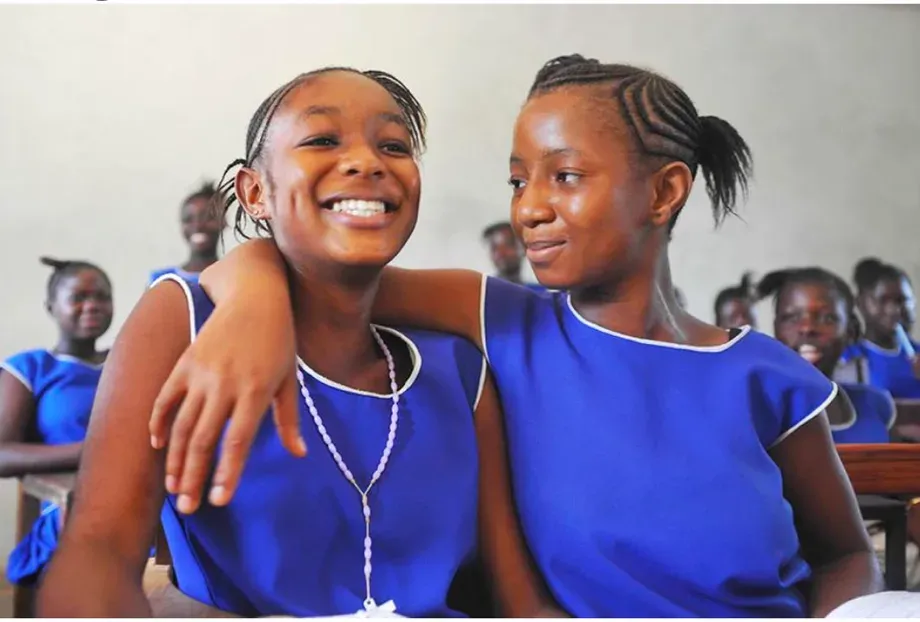
Adolescent girls’ perceptions of the COVID-19 infodemic in Sierra Leone
Trust, misinformation and ways forward: how Sierra Leone’s adolescent girls navigated the COVID-19 information environment.
Sierra Leone’s adolescent girls faced the challenges of the COVID-19 infodemic with a mix of trust and scepticism. A qualitative study conducted by the Institute for Development (IfD), in collaboration with the College of Medicine and Allied Health Sciences at the University of Sierra Leone and the School of Community Health Sciences at Njala University, set out to understand their views directly.
A diverse landscape of information
Where adolescent girls placed their trust depended heavily on where they lived:
- Urban areas: schools, and teachers in particular, were the most trusted source of information.
- Peri-urban areas: radio and local chiefs carried the most trust.
- Rural areas: health workers and radio were seen as the most reliable sources.
Health workers were trusted consistently across all three settings. Social media, by contrast, was widely distrusted everywhere.
Learning from past experiences
The study points to the value of reading today’s trust patterns against past experience. The newfound trust placed in health workers, attributed to their professionalism and evident goodwill, stands in sharp contrast to the fear and mistrust that defined the Ebola crisis. That shift shows how trust can be rebuilt over time through consistent, credible communication, even in a population that had good reason to be wary of institutional messaging before.
Making social media reliable
Turning social media from a channel associated with congosa (gossip) into a credible information platform means borrowing what already worked for health workers:
- Consistent communication: regular updates from trusted, authoritative sources build a reliable presence over time, rather than appearing only during a crisis.
- Teaching people to verify sources: giving adolescents practical tools to check the credibility of what they read online.
- Counteracting misinformation directly: actively debunking false claims by engaging with the community, answering questions, and addressing concerns as they arise, rather than after they’ve spread.
The path forward
Understanding how trust, misinformation and cultural context interact is central to improving public health responses, and to making sure communities are better prepared before the next health crisis arrives, not during it. This research points to the same conclusion from a different angle: tailored, place-specific communication built on trust is not a soft addition to a public health response. It’s the mechanism that determines whether the response is heard at all.
For the full study, see Adolescent girls’ perceptions of the COVID-19 infodemic in Sierra Leone: a qualitative study.