Health
Community Leadership in Health System Resilience.
A study of how community leaders are engaged in responding to health shocks, and of practical approaches to making that engagement more inclusive, accountable and sustained.
The 2020-21 COVID-19 pandemic, like the 2014-16 Ebola Virus Disease (EVD) outbreak before it, highlighted the weakness of the health system in Sierra Leone. However, it also opened up the possibility of reflection on areas for strengthening and improving health system resilience in the longer term. Trust has emerged as a key element that needs to be rebuilt, through better and more active engagement of communities and local community leadership structures. Dialogue at the local level and then the incorporation of communities’ views into COVID-19 responses and public health interventions is essential to promote accountability and trust in a context often characterised by mistrust in the health (and wider) system.
Learning from the EVD outbreak included the importance of proactive and decentralised leadership, active community engagement, and media communication. A recent study conducted in Kono district on the role of traditional local leaders and their communities in designing and implementing COVID-19 response strategies, reported that their inclusion and participation remains ad hoc. Additionally, participation played out along starkly gendered lines, with female leaders not included.
This learning site study aims to provide insights into the current engagement of community leaders (not limited to traditional leaders) in response to health shocks and to test approaches to supporting and improving engagement, in order to develop the resilience capacities of the health system. It adopts an inclusivity and accountability lens, ie includes people traditionally or historically excluded and at the same time shifts responsibility expectations and emphasises being accountable towards communities.
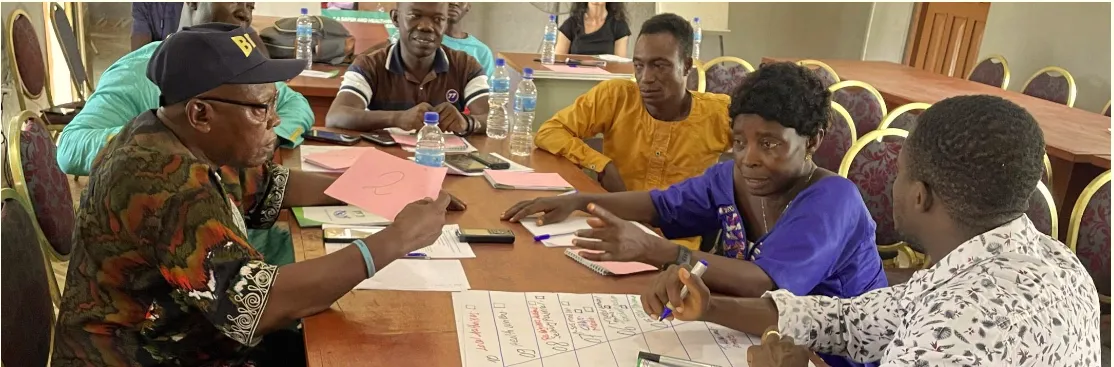
The study follows participatory action research principles and methodologies and makes use of qualitative and participatory data collection and analysis techniques. These include participatory power mapping, meetings/workshops with stakeholders, direct observations, and individual interviews with community leaders, health care workers, community health workers, and community members.
Outputs
Toolkit
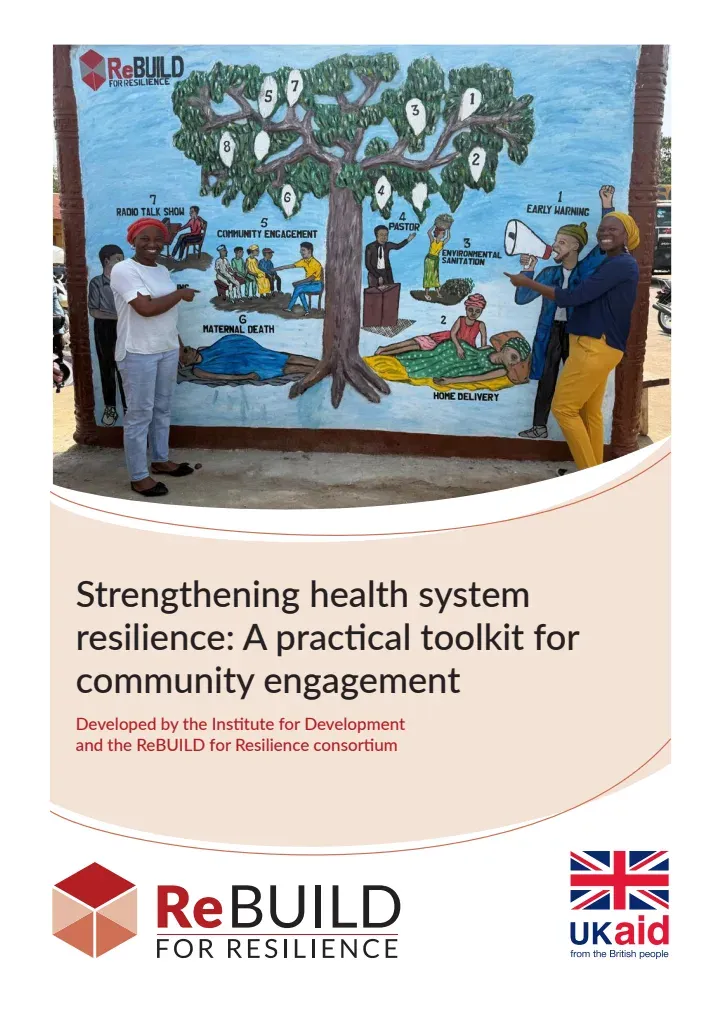
Strengthening health system resilience: a practical toolkit for community engagement
ReBUILD for Resilience, 2025