Health
Strengthening Community Health Systems.
A mixed-methods assessment of the absorptive resilience of local health and social systems responding to the Kush crisis in Kailahun District.
Kush, a synthetic drug, first appeared in Freetown around 2016 and has since moved into rural districts. Kailahun District, in Sierra Leone’s Eastern Province on the Guinea and Liberia borders, entered the crisis with health and social systems already weakened by the civil war, the 2014 Ebola epidemic and COVID-19, and with little of the national response, which has concentrated on Freetown’s informal settlements, reaching it.
This study assessed the absorptive resilience of Kailahun’s local health and social systems by mapping the interventions currently in place. Guided by the ReBUILD resilience framework and its distinction between absorptive, adaptive and transformative capacity, it asked how resilient those systems are in responding to a substance use crisis, what socio-economic drivers and structural barriers sustain the problem, and what communities themselves say they need for an effective and sustainable response.
How we worked
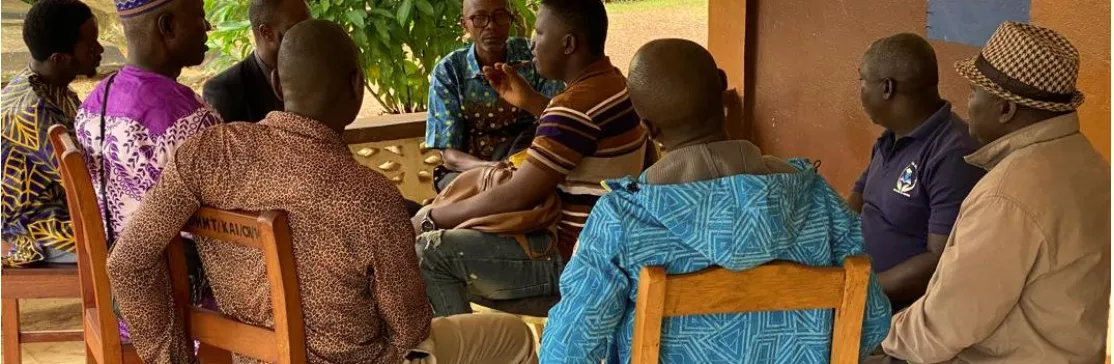
Fieldwork ran across Kailahun town, the district headquarters, and Daru, a major commercial community in the district. The mixed-methods design allowed triangulation across three sources: a 53-question survey with 50 at-risk youth covering demographics, use patterns and history, health effects, barriers to care, community perceptions, family impact and readiness for intervention; nine key informant interviews with traditional chiefs, a mental health nurse, a police officer, a youth chairman, an Imam and other community stakeholders; and three focus group discussions with 21 participants in total, including a women-only group in Daru. All interviews were conducted in Krio and transcribed. Quantitative data were analysed descriptively; qualitative data were coded inductively for emergent themes, then mapped deductively onto the resilience framework.
What we found
Use is widespread and entrenched. Of 50 respondents, 88% reported ever using Kush and all were aware of its presence in the community. Among users, 52% had used for more than two years and 80% were using daily or several times a week; most began between the ages of 15 and 24. The drivers named most often were the desire to feel good (61%), peer influence (55%) and escape from stress (52%). Unemployment and idleness emerged in every interview and group discussion as the underlying structural driver, consistent with the 52% of respondents who were out of work. Qualitative accounts added a dimension the survey categories missed: trauma, relational loss and hopelessness running back to the war and Ebola. Encouragingly, 73% of users reported that their use had fallen over time.
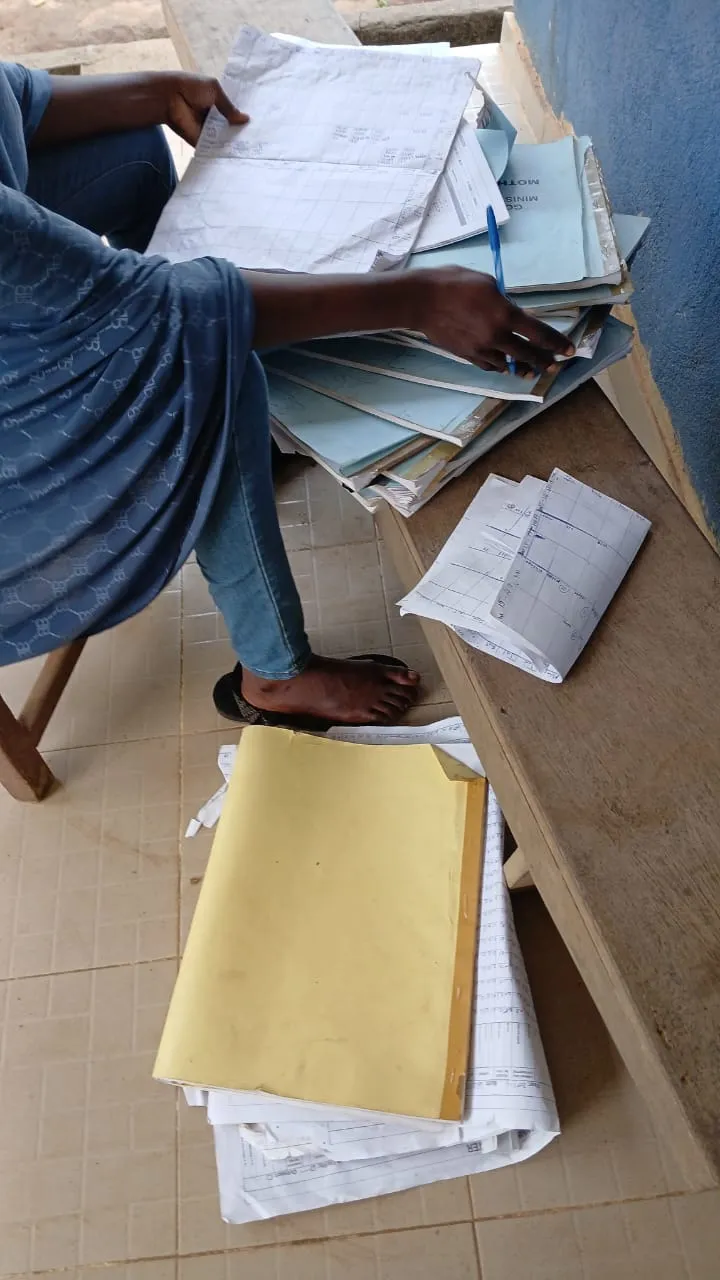
The formal system is reactive rather than preventive. The mental health unit at Kailahun Government Hospital handles 15 to 30 cases a month with four beds and two trained staff, stabilises patients with intravenous fluids and refers the harder cases to Kenema, roughly 117 kilometres away. There is no steady supply of mental health medication. A rehabilitation building exists in the district but has never been staffed, supplied or supported, leaving a private centre in Kenema as the only functioning option: effective, by participants’ accounts, but beyond most families’ means. No frontline group we spoke to (chiefs, police, religious leaders, youth leaders) had received Kush-specific training.
Policy change without investment undermined what was working. The reclassification of Kush users as “victims” rather than offenders, intended as a public health reform, arrived without treatment infrastructure or clear communication to local stakeholders. Chiefs, police and community leaders described withdrawing from anti-Kush activity afterwards, some after threats and property damage from users who returned emboldened from custody. Weak prosecution, tipped-off raids and alleged complicity along a supply chain running from Freetown, not across the Guinea or Liberia borders as often assumed, compound the problem.
Communities are carrying the response, and are ready to do more. Religious institutions provide the most sustained outreach, through weekly sermons and home visits; families act as the default rehabilitation service, at heavy financial and emotional cost, with relationship breakdown (72%) and financial strain (70%) the most cited family impacts; and youth groups run radio and school campaigns with no funding or transport support. Community attitudes are contradictory (78% see Kush use as a moral failure and 74% as criminal, yet 56% as a medical illness needing help), but 70% described their community as “very ready” to support new programmes, 96% said they would actively participate, and 76% believed full recovery is possible.
What happens next
The findings point to a combined response: legislative reform that criminalises distribution while decriminalising use, a functioning district rehabilitation centre, vocational training and economic alternatives for affected youth, supply chain disruption aimed at importers and distributors, and sustained engagement that works through existing community and traditional governance structures. Phase 2 will build on this evidence to co-design interventions with communities, drawing on the readiness this study documented while addressing the structural deficits it exposed.
Outputs
Journal article
Community-driven responses to the Kush epidemic and health system resilience in Kailahun District Sierra Leone
Discover Public Health, 2026